
Keynote 1: |
|
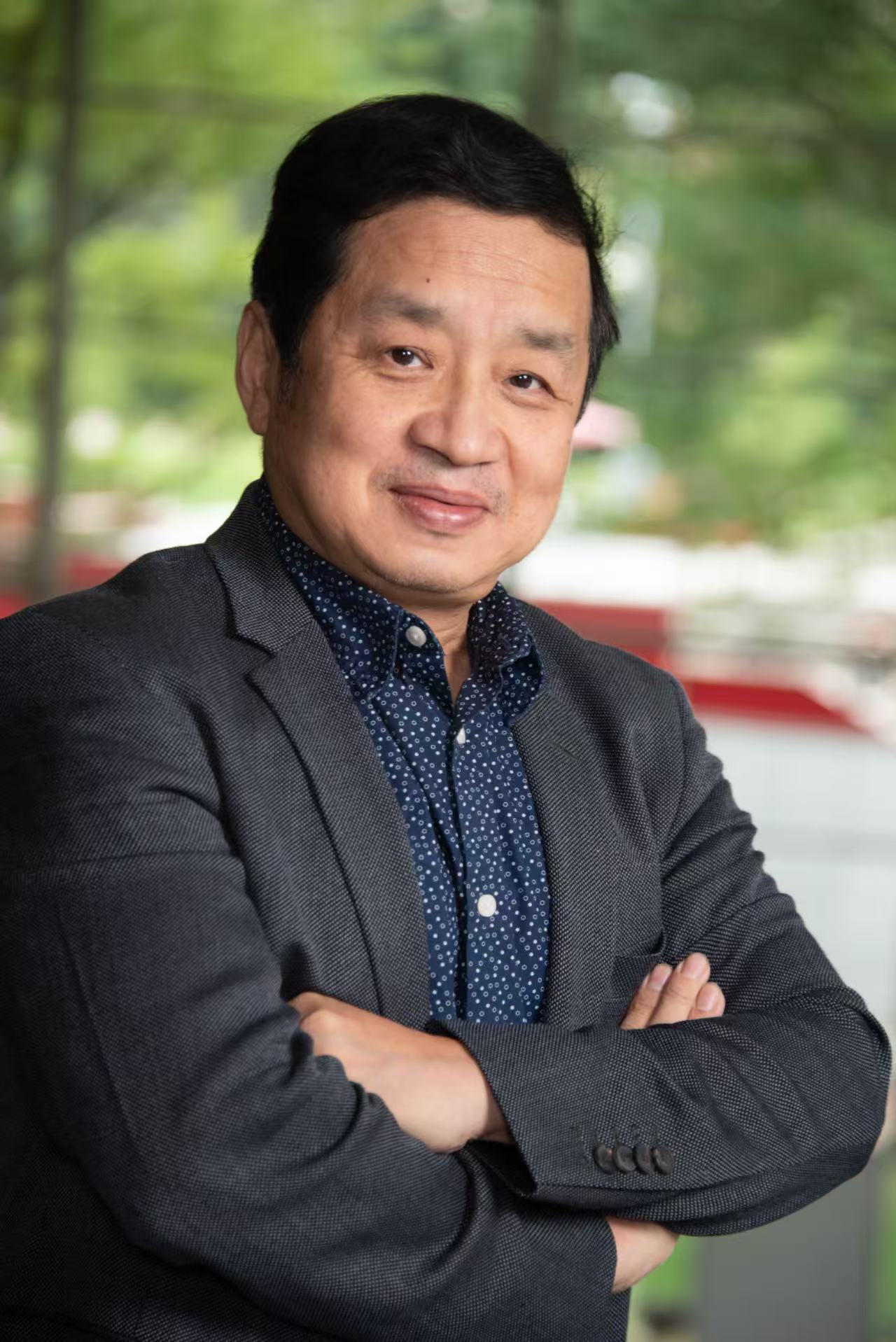 |
Prof. Jie Wu
IEEE Fellow | AAAS Fellow | ACM Distinguished Speaker; Member of the Academia Europaea; Professor, China Telecom and Temple University; Chair of the IEEE TCDP |
Title: "Efficient DNN Inference Through Edge-Cloud Collaboration"Abstract:
Deep neural networks (DNN) have been widely adopted in applications such as image segmentation, object recognition, and other computer vision tasks. However, reducing the makespan of DNN inference remains challenging, especially when computations are executed on resource-constrained IoT devices. Computation offloading provides a practical solution by transferring part of the workload from a slow local device to a faster remote cloud server. Since DNN inference typically consists of a multi-stage processing pipeline, a key challenge is determining the optimal layer or stage at which offloading should occur in order to minimize the overall makespan.
Bio:Jie Wu is Chief Scientist of China Telecom and Director of China Telecom Cloud Computing Research Institute. Before he joined China Telecom, he was Laura H. Carnell Professor at Temple University and the Director of the Center for Networked Computing (CNC). His current research interests include mobile computing and wireless networks, routing protocols, network trust and security, distributed algorithms, applied machine learning, and cloud computing. He serves on several editorial boards, including IEEE/ACM Transactions on Networking. Dr. Wu is/was general chair/co-chair for IEEE IPDPS'23, ACM MobiHoc'23, and IEEE CCGrid'24 as well as program chair/cochair for IEEE INFOCOM'11 and CCF CNCC'13. He was an IEEE Computer Society Distinguished Visitor, ACM Distinguished Speaker, and chair for the IEEE Technical Committee on Distributed Processing (TCDP). Dr. Wu is a Fellow of the AAAS and a Fellow of the IEEE. He is the recipient of the 2011 China Computer Federation (CCF) Overseas Outstanding Achievement Award. He is a Member of the Academia Europaea. |
|
Keynote 2: |
|
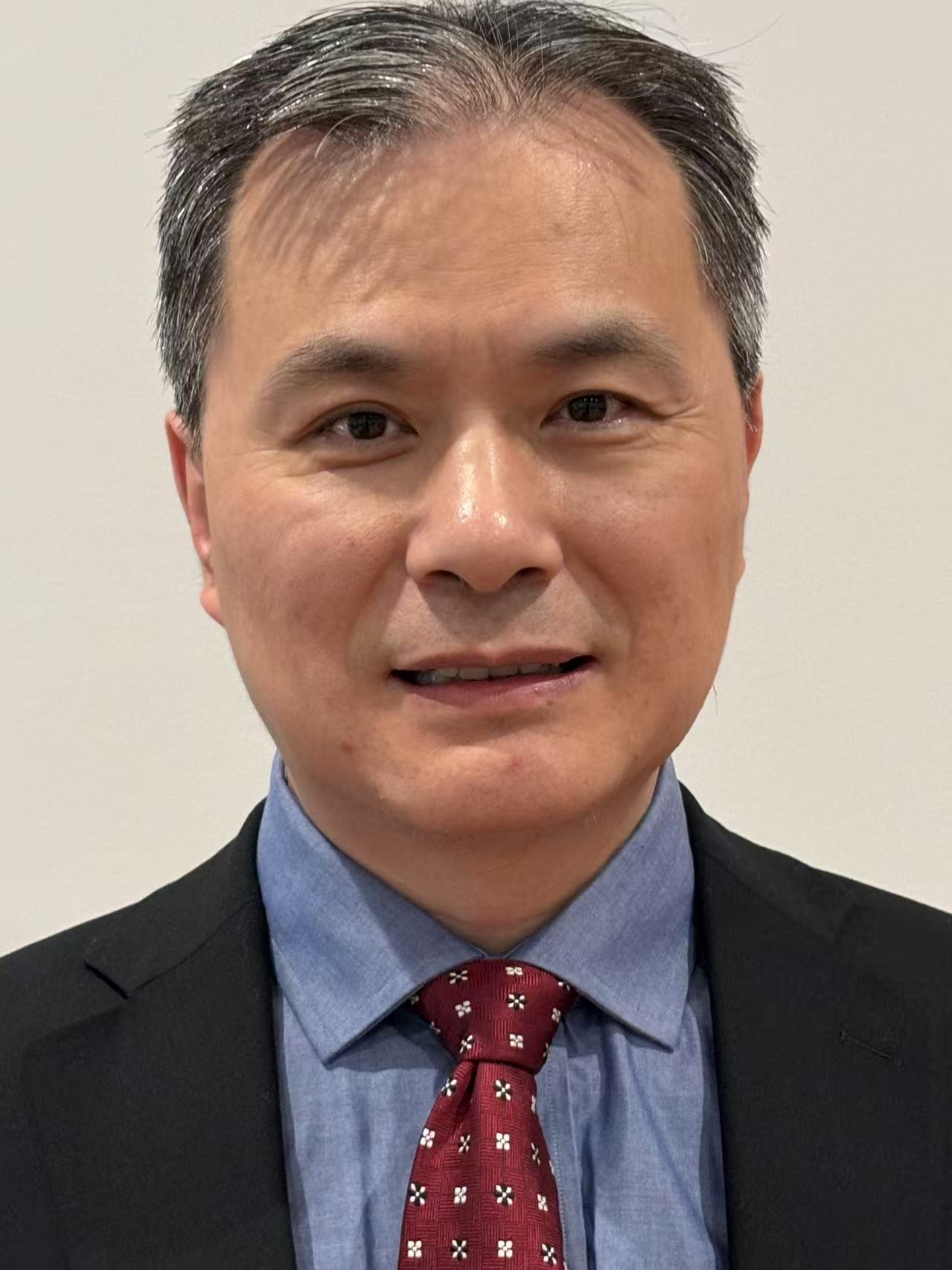 |
Prof. Qun Li
IEEE Fellow; Professor, Department of Computer Science, William & Mary; Chair, IEEE Computer Society Technical Committee on the Internet |
Title: "Toward Practical Quantum Computing"Abstract:Quantum computing is poised to transform information processing and optimization. To realize practical quantum computation, three major paradigms have been extensively explored: fault-tolerant quantum computing based on quantum error correction, error-mitigated computation on noisy intermediate-scale quantum (NISQ) devices, and analog quantum computing approaches, including quantum annealing. In this talk, I will discuss recent research progress across these three directions and highlight their applications in quantum networking, quantum program compilation, and quantum security. Bio:Qun Li is a Professor in the Department of Computer Science at William & Mary. He has co-authored numerous research papers spanning a broad range of topics, including quantum computing, edge computing, machine learning, fault tolerance, the Internet of Things (IoT), embedded systems, cyber-physical systems, mobile computing, computer networks, operating systems, and security and privacy. Professor Li is an IEEE Fellow and currently serves as Chair of the IEEE Computer Society Technical Committee on the Internet (TCI). He previously served as Chair of the Steering Committee for the IEEE Transactions on Multi-Scale Computing Systems in 2018. He has also served as Program Co-Chair for several international conferences, including WASA. In addition, Professor Li serves or has served on the editorial boards of several leading journals, including IEEE Internet Computing, IEEE Journal on Selected Areas in Communications (JSAC), IEEE Open Journal of the Communications Society, IEEE Transactions on Computers, and IEEE Transactions on Wireless Communications. |
|
Keynote 3: |
|
 |
Prof. Yong Cui
Professor, Tsinghua University; National Outstanding Young Scholar of NSFC; Director of Networking Research Institute |
Title: "The Future Internet in the Agent Era"Abstract:Fueled by the rapid advancement of artificial intelligence, relevant technologies have evolved from machine learning and large models to cutting-edge agent systems. Such evolution has dramatically transformed the mode of scientific research and innovation in various disciplines and exerted profound influences on people's daily lives. This report reviews the rapid developmental course of artificial intelligence technologies, explores AI-enabled ideas for interdisciplinary innovation alongside relevant national development strategies. With network research as an example, it analyzes the fundamental logic of leveraging large models to empower scientific research, and ultimately forecasts emerging opportunities for the Internet amid the agent era. Bio:
Yong Cui is a Tenured Full Professor in the CS Department at Tsinghua University, Director of Networking Research Institute. He received all degrees at Tsinghua University. He is the winner of the first "Chang Jiang Young Scholars Program" supported by Ministry of Education in China, the National Outstanding Young Scholar of NSFC and the New Century Talents Award of the Ministry of Education.
|
|
Keynote 4: |
|
 |
Prof. Junzhao Du
Professor, Xidian University; Deputy Director, Engineering Research Center of Blockchain Technology Application and Evaluation, Ministry of Education |
Title: "Edge-Cloud Collaborative Optimization for Agent Training and Inference, and Research on Embodied Intelligent Interaction"Abstract:With the rapid development of the Internet of Things and artificial intelligence, edge-cloud collaborative technologies for agent training and inference optimization have become a major research focus, with new techniques emerging continuously. This talk reviews recent advances, both in China and abroad, in the training and inference of large models and large-model-based agents, and discusses the latest architectures, paradigms, and underlying principles of intelligent agents. For embodied intelligence, the talk introduces the technological evolution from "being able to move and act," to "performing tasks in real-world scenarios," and further to "understanding and empathizing with humans." Finally, it presents the team's related research on multimodal perception and interaction, time-series forecasting, and federated learning. Bio:Junzhao Du is a Huashan Scholar Leading Professor and Tier-2 Professor at Xidian University, as well as a nationally recognized high-level talent. He serves as Deputy Director of the Engineering Research Center of Blockchain Technology Application and Evaluation, Ministry of Education. He is also a core member of the Shaanxi Key Laboratory of Intelligent Human-Computer Interaction and Wearable Technology, head of a Shaanxi Science and Technology Innovation Team, Chief Scientist of the Qinchuangyuan "Scientist + Engineer" Team, Vice Chair of the ACM Xi'an Chapter, a member of the Organizing Committee of the ACM China Turing Conference, a Distinguished Member of CCF, a standing committee member of the CCF Technical Committees on Internet of Things and Embedded Systems, and a committee member of the CCF Technical Committees on Distributed Computing and Systems and Blockchain. As the primary contributor, he received the Second Prize of the Technological Invention Award from the Ministry of Education in 2022, as well as the Special Prize and First Prize of the Shaanxi Higher Education Science and Technology Awards in 2021 and 2019, respectively. He has authored Principles and Practice of ZigBee Technology, a textbook included in the National Key Publication Planning Program. He has led multiple research projects, including key projects funded by the National Natural Science Foundation of China, pre-research projects, and research projects supported by Shaanxi Province. He has published numerous papers in leading international conferences and journals, including ACM UbiComp, ACM MobiSys, and IEEE/ACM journals. He received the ACM UbiComp 2017 Distinguished Paper Award at ACM UbiComp, a CCF Rank-A conference. |
|
Keynote 5: |
|
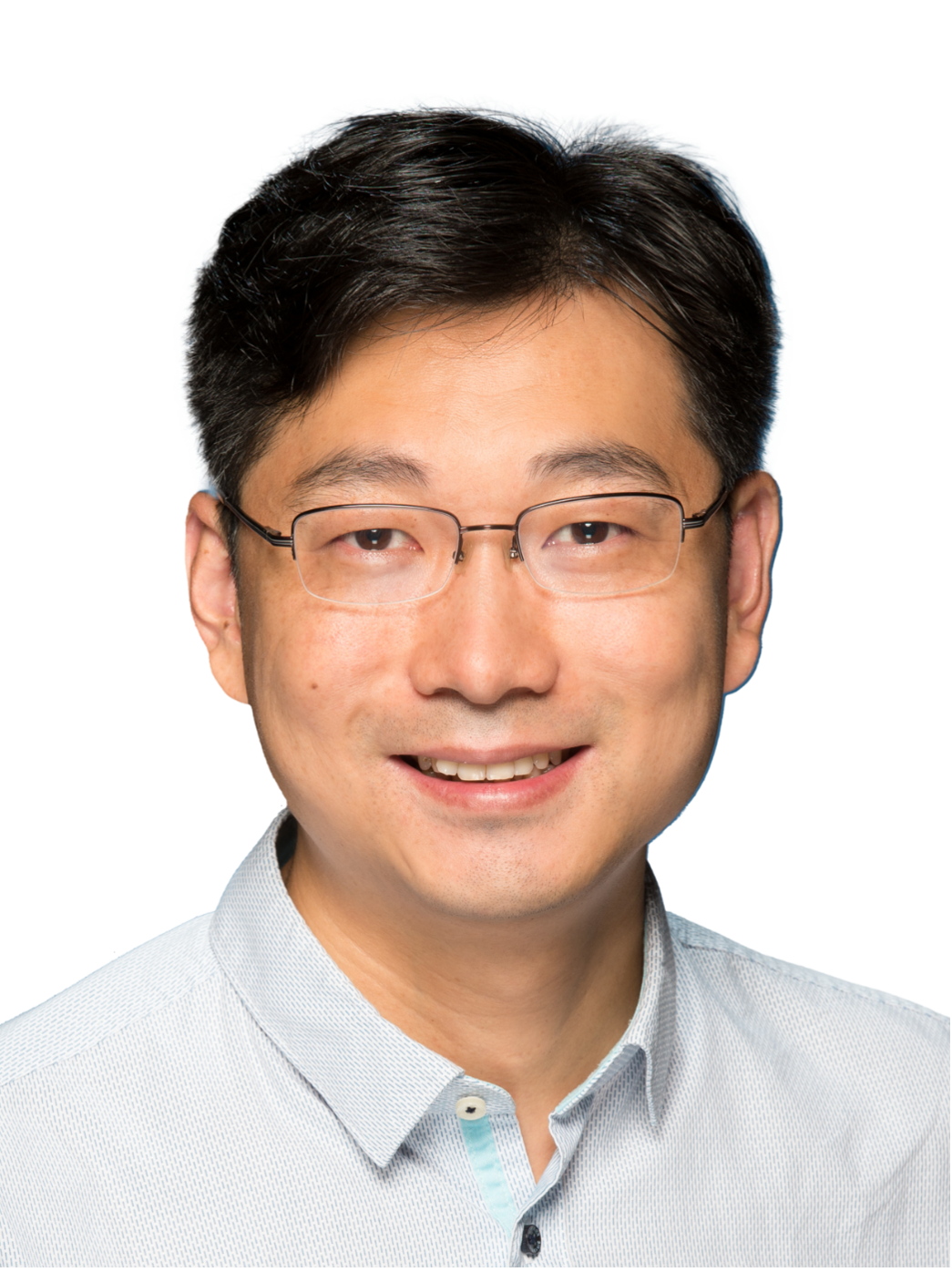 |
Prof. Xiaowen Chu
IEEE Fellow | AAIA Fellow; Professor, The Hong Kong University of Science and Technology (Guangzhou); Acting Head, Artificial Intelligence Thrust |
Title: "Collaborative Edge Intelligence: A Full-Stack Approach from Distributed Training to Efficient Inference"Abstract:The migration of artificial intelligence to the network edge promises low-latency and privacy-preserving services, yet faces a fundamental contradiction between the intensive computational demands of modern models and the limited resources of individual edge devices. This webinar explores a paradigm shift: leveraging collaborative computing to pool the idle resources of multiple trusted, co-located edge devices (e.g., smartphones, tablets, IoT gadgets) into a distributed system that overcomes single-device bottlenecks. We begin by introducing the background and core challenges of edge intelligence. Subsequently, we present a full-stack solution embodied by three cutting-edge research works. First, for distributed training, we delve into the Asteroid system, which introduces a hybrid pipeline parallelism framework tailored for heterogeneous edge clusters. By synergizing data and pipeline parallelism with a dynamic planning algorithm and lightweight fault tolerance, Asteroid achieves up to 12.2× faster training throughput compared to conventional methods. Second, for distributed inference of general Transformer models (e.g., BERT, GPT), we examine the Galaxy system. Galaxy designs a novel hybrid model parallelism architecture combining tensor and sequence parallelism, optimized with tile-based fine-grained computation-communication overlapping, delivering up to 2.5× inference latency reduction in bandwidth-constrained edge environments. Finally, for distributed large language model (LLM) inference, we analyze the Jupiter system. Jupiter employs a pipelined architecture specifically optimized for generative LLMs, innovating with intra-sequence pipeline parallelism for the prefill phase and an outline-based speculative decoding mechanism for the autoregressive phase, achieving a remarkable 26.1× end-to-end latency speedup. Collectively, these systems demonstrate the core design principle of employing hybrid parallelism to orchestrate edge resources efficiently, charting a coherent technological evolution from foundational training to specialized, high-performance inference for privacy-sensitive edge AI. Bio:Prof. Xiaowen Chu is a Full Professor and the Acting Head of the Artificial Intelligence Thrust at The Hong Kong University of Science and Technology (Guangzhou). He also served as the Acting Head and Head of the Data Science and Analytics Thrust at HKUST(GZ) from 2023 to 2025. He received his Bachelor's degree from Tsinghua University and his Ph.D. from The Hong Kong University of Science and Technology. His current research focuses on machine learning systems, distributed systems, and high-performance computing. He has received seven Best Paper Awards at international conferences, including EuroSys 2025 and INFOCOM 2021, and Distinguished Paper Award of ICDCS 2025. He serves (or has served) as an Associate Editor or Guest Editor for IEEE Transactions on Cloud Computing, IEEE Transactions on Network Science and Engineering, IEEE Internet of Things Journal, IEEE Transactions on Big Data, IEEE Network, and IEEE Transactions on Industrial Informatics. He also serves as an area chair for NeurIPS, ICML, and ICLR. He was the TPC Co-Chair or General Co-Chair of IEEE MetaCom 2025, IEEE/ACM IWQoS 2024, BigCom 2023, IEEE GreenCom 2022, IEEE HPCC 2021, IEEE DSS 2020, EAI QShine 2019, etc. He is a Fellow of IEEE and AAIA. |
|
Keynote 6: |
|
 |
Prof. Volkan Cevher
IEEE Fellow | ELLIS Fellow; Professor, Swiss Federal Institute of Technology Lausanne Amazon Scholar |
Title: "Training neural networks at any scale"Abstract:
At the heart of deep learning's transformative impact lies the concept of scale--encompassing both data and computational resources, as well as their interaction with neural network architectures. Scale, however, presents critical challenges, such as increased instability during training and prohibitively expensive model-specific tuning. Given the substantial resources required to train such models, formulating high-confidence scaling hypotheses backed by rigorous theoretical research has become paramount. Bio:Volkan Cevher received the B.Sc. (valedictorian) in electrical engineering from Bilkent University in Ankara, Turkey, in 1999 and the Ph.D. in electrical and computer engineering from the Georgia Institute of Technology in Atlanta, GA in 2005. He was a Research Scientist with the University of Maryland, College Park, from 2006-2007 and also with Rice University in Houston, TX, from 2008-2009. He was also a Faculty Fellow in the Electrical and Computer Engineering Department at Rice University from 2010-2020. Currently, he is a Full Professor at the Swiss Federal Institute of Technology Lausanne and an Amazon Scholar. His research interests include machine learning, optimization theory and methods, and automated control. Dr. Cevher is an IEEE Fellow ('24), an ELLIS fellow, and was the recipient of the ICML AdvML Best Paper Award in 2023, Google Faculty Research award in 2018, the IEEE Signal Processing Society Best Paper Award in 2016, a Best Paper Award at CAMSAP in 2015, a Best Paper Award at SPARS in 2009, and an ERC CG in 2016 as well as an ERC StG in 2011. |
|
Keynote 7: |
|
 |
Prof. Wei Dong
Professor, Zhejiang University; Vice Dean, the College of Computer Science and Technology; Distinguished Member, China Computer Federation |
Title: "LLM-empowered Internet of Things"Abstract:The recent advances in large language models (LLM) is making the Internet of Things (IoT) much more intelligent, while also introducing a series of new challenges. We focus on the difficulties encountered in physical-world perception, understanding, and control—such as low cross-domain perception accuracy, difficulties in comprehending complex specialized problems, and insufficient precision in control rule generation. This talk will present several key technologies, including cross-dataset human activity recognition based on implicit knowledge injection from LLM, visual perception understanding driven by multi-agent debate, and IoT control rule generation empowered by LLM. Finally, the talk looks forward of LLM-empowered IoT in various applications. Bio:Wei Dong is a full professor and serves as Vice Dean of the College of Computer Science and Technology at Zhejiang University. He is recognized as a National Youth Talent and National High-level Talent. He is a Distinguished Member of the China Computer Federation (CCF), Vice Chair of ACM SIGMOBILE China. His research interests include embodied intelligence of things, edge intelligence and IoT data security. He has published over 200 papers in top international conferences such as ACM MobiCom, MobiSys, SenSys, and UbiComp/IMWUT, and in prestigious journals such as IEEE/ACM Transactions on Networking and IEEE Transactions on Mobile Computing. He has received a number of awards including the best video award of MobiCom 2017, the best storage paper in USENIX ATC 2024, etc. He has edited two textbooks/monographs and holds more than 30 granted patents. He has won the First Prize of the Zhejiang Provincial Science and Technology Progress Award in 2023 and the CCF Distinguished Outstanding Science and Technology Progress Award in 2021. |
|